
A Visible Shift Unfolds at the 2026 Asia Amusement & Attractions Expo
If the children’s amusement park industry in past years remained stuck in competition over functional play spaces, the 2026 Asia Amusement & Attractions Expo showcases a collective shift toward elevated spatial experience.
On‑site at the exhibition hall, more and more visitors no longer only focus on equipment specifications, area layouts and single‑function play features. Instead, they linger around spaces with complete atmosphere, striking visual expression and immersive emotional engagement.
This shift is no accident. Previously, children’s zones in commercial complexes mostly served as supplementary amenities. Today, children‑oriented spaces have gradually become key touchpoints driving family foot traffic retention. Especially in high‑end commercial projects, children’s parks are no longer merely places for kids to play — they function as:
- Weekend family gathering destinations
- Social media content sources
- Integral parts of mall ambiance
- Critical differentiators for commercial complex competition
That is why the spaces drawing continuous crowds and camera shots at the 2026 expo are rarely standalone play equipment, but immersive zones with complete worldbuilding, strong visual storytelling and experiential logic.
Immersive children’s amusement parks are no longer a vague concept; they have become a core keyword defining the next phase of commercial amusement trends. Meanwhile, a more noteworthy direction is emerging:
The Glimmer Secret Realm theme is entering the mainstream of high‑end children’s park design.
Why Is the Glimmer Secret Realm Rising?
1. Homogenization of Traditional Parks Erodes Commercial Appeal
The children’s amusement park industry has expanded rapidly over the past decade. Yet rapid growth has come with widespread homogenization across countless projects:
- Standardized equipment combinations
- Identical colour schemes
- Lack of thematic storytelling
- Template‑style spatial experiences
With similar layouts available in nearly every shopping mall, stacking play equipment alone can hardly build genuine competitive barriers. Visitors’ threshold for novelty keeps rising.
Young families, in particular, are no longer satisfied with conventional functional play. They prioritise spaces featuring:
- Atmospheric vibes
- Aesthetic expression
- Social media sharing value
- Emotional experience
This means the core competitiveness of high‑traffic children’s parks in the future will lie not in equipment, but in spatial content.
2. Eye‑Catching Spaces Are Becoming New Commercial Traffic Hubs
In the social media era, whether a space is “share‑worthy” directly impacts its communication efficiency.
More commercial complexes are realising that family visitors are not just consumers, but also content creators.
When a children’s park features high visual recognisability, users spontaneously:
- Take photos
- Record videos
- Share on social platforms
- Generate secondary exposure
Such organic outreach often outperforms traditional advertising. Therefore, viral‑worthy children’s parks are not just visually appealing — their spaces themselves possess content‑spreading capabilities. This explains why immersive spatial design is gaining traction among family entertainment centre projects. It reshapes not just decoration styles, but commercial customer acquisition logic.
3. Worldbuilding Design Replaces Equipment‑Combination Logic
A prominent trend observed at the 2026 Asia Amusement & Attractions Expo is:
Visitors spend far more time in fully themed spaces than ordinary equipment zones.
The reason is straightforward. A space with complete worldbuilding is more than a play area — it is an experiential scene triggering emotional engagement.
Traditional children’s parks are merely collections of play equipment. Future immersive children’s parks function as walk‑in story spaces. Every element, from spatial circulation, lighting systems and material textures to character vibes, scene layers and interactive mechanics, forms a unified narrative. This evolution marks the shift of children‑oriented businesses from recreational functionality to an emotional‑experience industry.
4. Young Families Are Willing to Pay for Emotional Value
Consumption decisions among new‑generation families have changed drastically. When selecting children’s spaces, parents consider more than just play duration for kids, including:
- Companionship atmosphere
- Immersive experience
- Lasting family memories
- Premium aesthetic enjoyment
Especially in high‑end commercial projects, parents increasingly favour spaces delivering emotional value — a natural strength of the Glimmer Secret Realm theme.
Different from the over‑stimulating cartoon styles of traditional parks, it emphasises:
- Ambience
- Mystique
- Natural vitality
- Emotional immersion
Its experiential logic perfectly aligns with current consumption upgrading trends.
5. Commercial Complexes Redefine the Value of Children‑Oriented Businesses
Children‑focused businesses were once viewed only as traffic‑drawing supporting amenities. Today, more real estate developers regard children’s spaces as:
- Core hubs for family consumption retention
- Social media touchpoints
- Mall content scenarios
- Stable weekend traffic generators
As a result, commercial complexes prioritise:
- Spatial aesthetics
- Viral potential for social sharing
- Family stay duration
- Social attributes of scenes
This is why futuristic oriental fantasy garden design is gaining popularity among high‑end commercial projects. It delivers differentiated visual experiences while building cultural recognisability and long‑term memory points.
Why Does Glimmer Secret Realm Represent the Future?
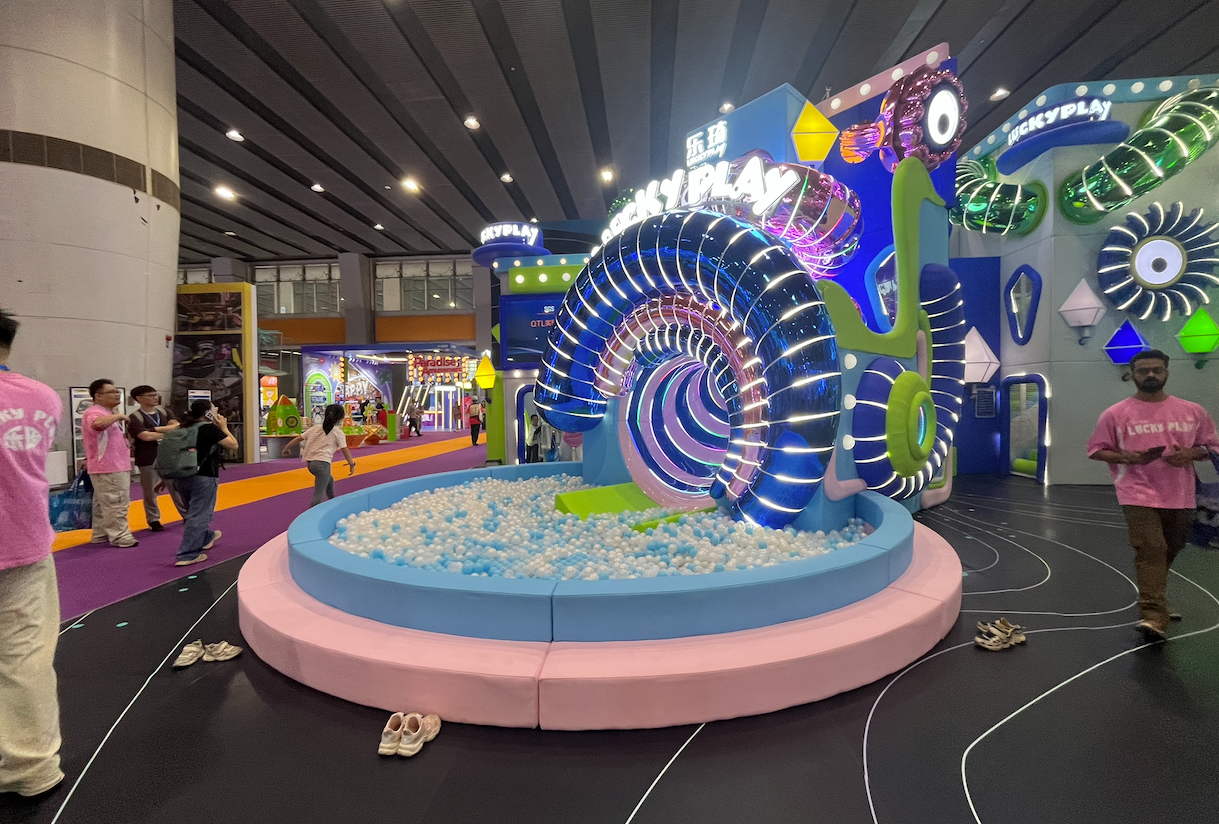
Glimmer Secret Realm – Futuristic Oriental Fantasy Garden drew wide attention at the 2026 expo not only for its striking visuals, but also for embodying core directions for high‑end immersive children’s amusement parks of tomorrow.
1. Futuristic Oriental Fantasy Aesthetics Create New Spatial Identity
Traditional children’s parks have long relied on highly saturated colour palettes. However, high‑end commercial projects increasingly favour more layered aesthetic spatial expressions. The futuristic oriental fantasy system of Glimmer Secret Realm is not a copy of classic ancient styles, but a spatial language blending futurism, natural vitality and oriental artistic conception.
This aesthetic elevates children’s spaces from low‑age entertainment visuals to family‑shared aesthetic zones.
2. Sci‑Fi + Natural Vitality: A New Emotional Language
Compared with pure sci‑fi or nature‑themed designs, vitality‑infused spaces better resonate with modern users. Design elements in Glimmer Secret Realm, including slides, the “Eye of Life” and energy‑flow visuals, build perceptible emotional atmospheres that inspire:
- Curiosity to explore
- Immersive engagement
- Emotional lingering
- Long‑lasting memories
These are vital directions for future immersive spatial design.
3. High‑End Visual Systems Become Commercial Competitiveness
Future high‑end children’s park design will place greater emphasis on complete visual systems, covering not only equipment appearance but also:
- Lighting language
- Colour structure
- Spatial layers
- Material textures
- Scene atmosphere
Glimmer Secret Realm gains viral potential mainly through its unified, comprehensive visual worldbuilding, which directly boosts:
- Social media communication efficiency
- Visual memory points for commercial complexes
4. Family Stay Logic Reshapes Children‑Oriented Spaces
Competition for future children‑oriented businesses is not about what kids play with, but how long families choose to stay. Beyond basic play functions, Glimmer Secret Realm focuses on:
- Joint family exploration
- Emotional companionship
- Spatial interaction
- Immersive experiences
This logic caters to high‑end commercial complexes’ demand for family‑retention‑focused children’s zones.
5 Major Future Trends for Children’s Amusement Parks
1. Accelerated IP‑Based Park Development
Future children’s amusement parks will increasingly evolve into spatial IPs.
Visitors will remember worldbuilding and thematic stories rather than individual play equipment. Therefore, original thematic design capacity will become a key competitive advantage.
2. Spatialised Emotional Value
Future consumption will extend beyond functional needs. Visitors will prioritise:
- Emotional healing
- Atmospheric experiences
- Family bond building
- Immersion
Children’s spaces will gradually transform into emotional‑experience venues.
3. Social Media Sharing as a Core Traffic Source
High‑traffic children’s parks will increasingly rely on organic user‑driven promotion. Thus, share‑worthy design will become a vital indicator for spatial planning.
4. Immersive Theming Replaces Traditional Equipment Logic
Future project competition will centre not on equipment upgrades, but on building complete immersive worldbuilding — a critical trend for amusement parks and family entertainment centres.
5. High‑End Malls Prioritise Family Stay Duration
Children‑oriented businesses in commercial complexes will no longer only drive foot traffic, but also:
- Extend visitor stay time
- Optimise consumption chains
- Boost family repeat visits
- Build scenario‑based memories
Accordingly, high‑end children’s park design will focus more on spatial experience efficiency.
Conclusion: The Children’s Amusement Industry Enters the Spatial‑Content Era
Signals from the 2026 Asia Amusement & Attractions Expo are clear: the next‑stage competition in the children’s amusement park industry is no longer about equipment, but about:
- Worldbuilding
- Emotional experience
- Spatial content
- Social media outreach
Projects with long‑term commercial value will satisfy not only play demands, but also become integral parts of family emotional life. Glimmer Secret Realm by Leqi gained attention not merely for its novelty, but for aligning with next‑generation consumption trends: visitors crave spaces with stronger emotional resonance, higher‑grade aesthetics and more distinctive memory points.
Glimmer Secret Realm – Futuristic Oriental Fantasy Garden exemplifies this shift. More than just a thematic style, it marks the transition of children’s amusement parks from the equipment‑driven era to the immersive spatial era.
As a premium integrated solution provider for indoor amusement parks, Guangzhou Leqi continuously explores ways to build future‑oriented children’s spaces with commercial value, family emotional value and long‑term communication value.
Access More Premium Children’s Amusement Park Trend Solutions
If you are planning:
- Children‑oriented zones for commercial complexes
- Family Entertainment Centres (FECs)
- High‑end immersive children’s amusement parks
- Children‑focused cultural tourism spaces
- High‑traffic viral‑worthy amusement park projects
Welcome to communicate with the Guangzhou Leqi team.
You can obtain:
- Immersive children’s park design cases
- Custom amusement park design proposals
- Planning advice for premium commercial children’s spaces
- FEC investment analysis
- Factory tours and project consultation services